Wednesday, 27 July 2016

New shoes for deprived children in El Porvenir

Last Friday at the HCA, we had the great joy of being able to hold yet another 'shoe giving day' alongside the NGO 'Soles 4 Souls'.
https://soles4souls.org/
Tiffany Johnson, leader of the partner organization, arrived at the El Porvenir Firestation on Friday morning with a team of five volunteers. HCA international volunteers (from the countries USA, UK, Italy, Germany, Brazil, Austria, Finland and Honduras) were already at the scene playing with scores of excited children alongside the local firemen.
The two organizations proceeded to line up the many children and measure their feet before carefully allocating them brand new shoes of the correct sizes. All volunteers were heavily involved throughout the day covering a wide range of tasks from measuring shoe sizes to photographing the event. Two locations were worked - starting at the Firestation in the morning and then moving to Barrio de El Mitch in the afternoon. The latter being regarded as El Porvenir's most deprived neighborhood. A truly wonderful day it was, bringing both volunteers and the community perfectly together. Most imortantly, hundreds of in need children - now have new shoes. No more coming to our classes barefoot!


Sunday, 17 July 2016

In El Porvenir

The sea lies peacefully out front. It sits there calmly, wave after wave rolling gently over the expanse of tropical, light blue or at times grey water - itself populated by an outstanding abundance of creatures from the Barracuda to the Pelicans. Local fisherman every now and again impressively haul in the former. They take to the Caribbean coastline of Atlántida department, northern Honduras, in their dugout canoes - all products of the surrounding jungles. Many stout, ancient trees such as the Mahogany can be found deep inside these tropical forests which so engulf the landscape within this zone of the country. They (Mahogany) are not used for the canoes though as the days of Mahogany felling went out with Piracy. The latter does still occur at times yet not in the same fashion as the sixteenth, seventeenth and eighteenth centuries. This being an intriguing chapter of Honduran or rather Caribbean history.

 
Photo: An excellent example of the Honduran hardwoods found in the forests here


There on the beaches commune the fishermen as they smoke La Juana, talk shit and drink beers (Salva Vida - the Honduras national cerveza) whilst then more often than not ending up in squabbles amongst each other. As I write this from the beach house I can hear one calling another 'hijo de puta' or a 'son of a bitch'. These poverty stricken fishermen sit under the shade near our house in a pitiful state.

Local mothers take their children to La Playa for a swim. This being a perfect opportunity for them to get themselves and the children out of the house and away from the merciless heat that so pursues us all in the town. Women here however, do not sport bikinis as they are considered quite taboo. A stark contrast to other Latin American countries such as Brazil or Colombia. Honduran society is more conservative in general - thus making women cover up on the beaches. A lady seen in this kind of outfit within a public zone is seen in the same light as her going simply naked.
 
 
Photo: Posing on the beach, Honduran national team shirt (football) with cabanas
and mountains/jungle in the background
 

Beach huts, palm-thatched and wooden poled constructions known in Spanish as 'Cabanas' are to be seen plotted along the beaches. These are the beach side bars and restaurants cum nightclubs frequented solely by locals or perhaps every once and again by the token gringo or middle-class Hondurans who come from La Ceiba at weekends. At the end of the beach there is a large river running from the sea mouth at its end and then all the way from there up into the mountains. The mountains stand high and mighty in the not so far distance, they appear as the giant lush, green defenders of El Porvenir. They are nature's guardians who so protect the town and its people down below with the huge shielding effect they seem to hold on the landscape. The mountains appear gigantic as one looks up on them from the beach zone, densely forested with the odd waterfall cascading spectacularly from high up in those forested hills. They are remarkable visible, especially so when it rains and the mountains appear a strong shade of dark blue.


Photo: My favourite place. The river looking towards the mountains behind


The La Ceiba bus storms into town, its driver blasting the horn excessively in his attempt to alert the townsfolk of his llegada or arrival. People pack into these chicken buses, a bright and colourful ethnic mix of Indios, Negros, Mestizos and Blancos filling the tightly cramped seats. Music fills the air as one passes mountains, rivers, plantation fields and bustling cities. Musica Latina or Jamaican/Caribbean tracks pump from the driver's speakers at his side. He is one of a three man team formed of a fare collector, the driver and then his assistant. The assistant always appears to sit and enjoy a good laugh. The fare collector is arguably the busiest as he helps passengers on and off the bus, collects the fare prices (you just pay the sum - there are no tickets given) and then hands out the change. He chucks copious amounts of change between his hands as he wobbles between the seats. La Ceiba is where I always go on the bus, this city is the region's capital and is further known as the 'party capital' of Honduras.

The streets of El Porvenir are flat. This is the most obvious and important note that one could make about them. There are simply no hills in the town - being strikingly different to the places I saw in Lempira department, western Honduras during my first time in this extraordinary country. Atlántida and Lempira are two very different places with actually very little in common. Strays dogs wander the streets as carefree as the little children. Sometimes the dogs appear in better shape than the children. A clear result of the poverty here. The poverty however doesn't impact the happiness of the children, they are constantly at the ready to come running up and give you a hug or ask for a piggyback to whether they're headed. Their glowing smiles come always with an 'Hola senor gringo!'
 
 
Photo: The flat streets of El Porvenir


The tut-tut cabs wobble around precariously through the quiet streets of El Porvenir,
occasionally overtaken by a bus or a city taxi. These small, red, three-wheeled vehicles are definitely something that will characterize the tourist's time in Honduras. The houses here are all extremely different. You can encounter a large villa style building next to a shack. The dirt poor live by side by side the wealthy. Those who make money stay in the same neighbourhood it would appear - 'a look what I've achieved' attitude existing amongst some.


Photo: A typical shack found in the poorer sections of the town


Wednesday, 6 July 2016

Confusing attitudes towards black people

Whilst being here for over a month now, I have at times heard some rather appalling or frankly strange remarks about black people or persons - here in El Porvenir. To begin with, one must look at the history to understand the present. The history of black people on Honduras being an intriguing chapter of Latin America's journey. Here in the north coast zone of Honduras - blacks hardly got off to a good start.

At first, they came as nothing more than slave labour - 'imported' by the British from nearby colonies (late 19th to early 20th centuries) such as Jamaica and 'British Honduras' (now Belize) to work on either fruit plantations or in logging camps. Mahogany was the prized hardwood, the territory of modern day Belize was in fact founded by Scottish pirates who created 'logging colonies' - an extremely profitable venture and undoubtedly safer than Piracy. The Spanish had of course left a handful of Negros on the Honduran coast yet they were outnumbered by the English or rather Creole speaking blacks.


Honduran workers, many of them being migrants from inland regions such as Olancho, were employed on the plantations. Whilst the British became less of a force and their presence dwindled in the region of the Central American Caribbean, the North Americans stepped in. Notably with their fruit companies. Notorious organizations such the United Fruit Company based out of New Orleans started making a name for themselves. There is a good book I read on the subject entitled 'Banana Cultures' by John Soluri, published by the University of Texas press. North Americans preferred employing the English speaking blacks to work their plantations - they were also given more positions of authority on certain sites. This deeply aggravated the native Hondurans, a grudge was subsequently born amongst the populace of the north coast towards Los Negros. Blacks were seen to be cheating Hondurans out of work - made worse by their being a people from Africa who didn't belong. Racist and intolerant attitudes surely have their roots at this point in time. It would appear quite strongly, that even to this day, mind-sets in El Porvenir haven't progressed...


'Te gusta las negritas?' I have been asked a few times. It's always hit me here as an entirely inappropriate and indeed unexpected question - 'do you like the black girls?' On being asked by some teenagers I replied after consideration (choosing honesty of course) 'pues claro - si son bonitas' or 'well of course - if they're pretty'. This was met with uproar, the three Honduran girls making ranging comments from the 'best' (least offensive) being 'ay no Ben - las negras no!' to the absolute worst 'se parecen como monos'. The latter comment being completely intolerable in any language - 'they look like monkeys'. Schoolchildren too, will frequently bully black classmates. If a black child does anything to irritate a Honduran, then the typical response amongst them is to shout 'negro!' or 'negra!' at the said black child. We always have to step in as the volunteers and scold those who choose to use the child's race as a reason to bully them. That being said, it's not as if we all come from angelic countries where no one has ever insulted a black person - USA and UK please stand up. We do though have the utmost responsibility to teach that racism is unacceptable amongst those we come into contact with.

 
Photo: 'Pues claro - si son bonitas'. A previous Miss Honduras
 

Whilst certain Hondurans display unkindness towards blacks here, they then behave most strangely and contradict their racist attitudes frequently. Hondurans who are quite clearly not black skinned, call themselves and each other 'negro y negra' - for some reason. 'Que tal negra?' I've heard young men say to girls in an almost flirtatious manner. 'Todo suave papi negro' or 'all suave black daddy' - I have heard as an amusing response. A Honduran lady, a mother of a friend says to me every time I see her 'que negro andas' - roughly translating to 'how black you're looking' on account of my progressive tanning. No offence is meant by it, it's like when I was told by the local fire chief that him and his colleagues were going to teach me a style of Spanish (they have a laugh at my Castellano style Spanish from Spain which I've acquired) which they called 'la pura negra'. What they meant by that was I going to speak a kind of 'black person's Spanish' like them...none of them are black though. The conflicting comments leave an outsider like myself  quite perplexed in trying to understand the situation here. Whilst at times locals say things beyond unacceptable about black people they then come across as carrying some kind of affection towards their darker brother and sisters. According to that same mother I mentioned, she told me that in a year's time 'te vas a ser negro como nosotros'. I am apparently going to be black like them. The thing is they have as much 'changing' to do as me on that one...


Monday, 4 July 2016

A repulsive state of affairs

Whilst strolling through some quiet back lanes the other day alongside a local girl, the two of us came across a friend of hers. The girls greeted each other as we passed ourselves with some textbook Spanish exchanged - 'Hola, como estas?' - 'bien y usted?' On passing the other girl up, my companion soon told me about her friend. The tale not being something I was expecting to hear.

'Ella tiene tres hijos ya - pero con quinze anos Ben' she told me softly. I was utterly shocked. I believe I asked her to repeat herself. On confirmation that the girl was indeed a 15 year-old-mother of three I took a few seconds and threw out another question. I asked when she had the first child. The answer being at 11 years of age.

My head tends to swim on hearing such things, questions filing my mind like 'what kind of animal impregnates an 11 year-old?' to 'how on earth does the girl cope?' etc... I have been thinking about the girl, about how her life has been robbed from her - that at 15 years of age she has not just one but three children to care for. Motherhood being a responsibility for life. The grandest of responsibilities for a woman surely. Three children from 11 to 15 years is something just deplorable.

What of that girl's dreams or desires - what of her innocence at 11 years - what of her as a person? How could someone (I refuse to call the father a man) violate the life of a little girl as has been done so abhorrently with this young lady? I saw the same girl later that night on my being invited to Church. There she was with two of her children, a tiny boy and a tiny girl. 

Eco tourism short

I came across these photos and thought they might look good on the blog - being that they perfectly exhibit the natural beauty of Honduras. These were taken whilst we hiked the Pico Bonito national park. A truly captivating series of waterfalls were encountered during our trek, these such places (as one can see in the photos) are sources of economic value - bringing in many a visitor from afar. As each and every Honduran licence plate says 'cuidamos los bosques' or 'we look after/care for the forests'.


Link for those further interested in Pico Bonito: https://en.wikipedia.org/wiki/Pico_Bonito_National_Park


Saturday, 2 July 2016

A disturbing story

In a class I gave last week, I learned something terrible about a female student of mine. Whilst teaching 'La Familia' in English I asked some students to tell me about their own. 'How many brothers and sisters do you have?' etc...Student's answers were following normal lines until we reached a certain girl.

The girl informed me of how many she had (a lot) but soon added that she'd lost one. This being a brother. I never know what to say apart from 'I'm very sorry' when I hear people say such saddening things yet if I thought that part was difficult to reply to - I had no idea what was coming next. I didn't press her of course as to how the brother died - she offered it straight up in clear Spanish. 'Lo mataron' or 'they killed him'. Being in Honduras, where murders are a tragic normality - I assumed immediately that it would be something to do with criminality. I wasn't thinking the brother would have been a criminal per say yet I thought he may have met his end of the hands of gangbangers perhaps - as many innocent people do here.

To combat the queer silence that unfolded I decided to ask 'ellos eran criminales? Los asesinos?'. She replied that they were not criminals - those who killed her brother. The reason came out at this point. The girl explained that her brother was gay. He met a violent death on account of being a maricon...a faggot. Homosexual intolerance or rather homophobia are indeed something quite rampant within Latin America. I understood beforehand that this very religious part of the world sees homosexuality as a threat to the family amongst other things yet I'd no idea of how some 'deal' with gays - murdering them by way of machete or lynching - as my student graphically detailed. I actually think, if I understood her fast-paced Caribbean Spanish correctly - that her brother was killed in such a fashion. 

The class picked up again after that. I'm sure we all thought that she'd told us the story very matter-of-factly as indeed many people do when they've lost someone in such circumstances. To conclude on this disturbing tale, I'm actually not so sure of what to say. Whilst I myself am not homosexual and have found myself a few times quite uncomfortable discussing attraction for the same sex - I would never seek to hurt physically or emotionally someone of that persuasion. Their choices, their life is how I see it as long as it isn't rammed in my face. To murder someone and indeed in such a brutal way, solely for their being gay - is beyond my comprehension. Just another 'throw-away' tale I've been told whilst here in El Porvenir...


Tuesday, 28 June 2016

Los Cayos Cochinos

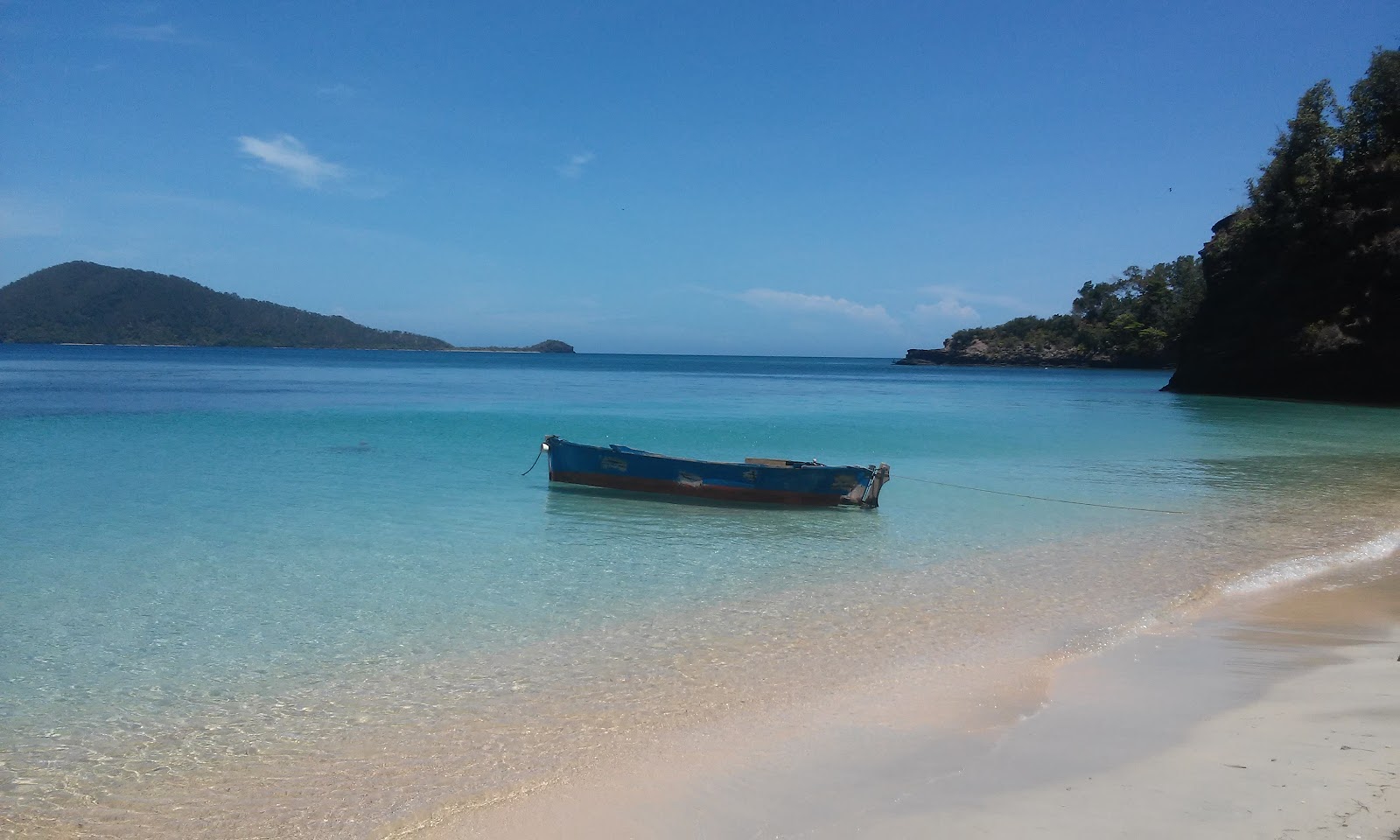
The world holds within it a swathe of marvellous places, zones within our planet that make the human being pause and take a look at his or her life, making them realize furthermore that life itself is indeed and undoubtedly worth living. The reason being simple - how it could it (life being worth living) not be when we are blessed with such a beautiful place in which to reside. Cayos Cochinos is without any doubt...one such place. I am truly glad that we decided to make the trip there last weekend, glad for myself especially as I was more inclined to pass it up.

The name Cayos Cochinos means the 'dirty cays'. The Spanish named it so during the age of discovery in the Americas - as British pirates used these 13 small islands as a hideout and operating base. The Spanish were at a loath to cross into this beautiful yet then perilous zone - a place they could meet their deaths from English, Welsh or Scottish privateers. They are now a protected reserve (treaties having been signed by countries such as Spain and Italy) supporting all kinds of astonishing biodiversity - both marine and land. From Iguanas to Nurse sharks - the cays offer stunning wildlife. To get there we took a thrilling boat ride from a small town (a Garifuna community) called Sambo Creek. Getting out towards the islands the waters appear extremely high and deep - 'Honduras' intriguingly meaning 'deep waters' in Spanish, Columbus naming the country so after periling with his fleet through the great sea depths off the north coast.

The Garifuna people reside on the islands - making an income from very sustainable and exhilarating tourism trips- such as ours. From paying a tax on the main island to enter the cays at a military guarded tourism information base to then snorkelling with exotic marine life, trekking through jungles on the lookout for Boa snakes and finally landing in a Garifuna community to spend the night - the trip was simply extraordinary.

The Garifuna village we stayed in was a fascinating little place although from my previous time in a Garifuna village in Tela (a nearby coastal town) I felt that the coastal Garifuna were friendlier than the island people. They live in a mix of traditional wooden/wattle and daubed earth walled buildings to adobe or wooden planked constructions. The gorgeous views of the Caribbean surrounding them on all sides - these once British owned slaves make their livings from fishing mostly if not tourism ventures. The beaches are utter marvels - all the more so as the sun sets over the crystal clear turquoise water. These are travel brochure destinations.

Who are La Garifuna?

More often than not referred to as 'Garifuna', they are truly called 'Garinagu' whilst the culture and language themselves are 'Garifuna'. The epic story of the Garinagu begun during the early 1600's on the Caribbean island of St. Vincent. The Landing by Benjamin Nicholas
In 1635, two Spanish ships carrying Nigerian slaves sank directly off the coast of St. Vincent. The surviving slaves swam ashore and found shelter within Carib Indian settlements. Over the next century and a half, these two peoples intermixed and eventually fused into a single culture - the Black Caribs or Garinagu.
By 1773, the Black Carib formed the dominant population of St. Vincent. European politics however began to exert their influence throughout the Caribbean. A series of wars between the French and British on St. Vincent culminated in a final battle on June 10th, 1796, the French and their Carib allies where ultimately forced to surrender and leave the island. This henceforth started a journey for the exiled Caribs - now in search of a home.
It was then the British who simply marooned Caribs on the island of Roatan, Honduras. Shortly after, the entire marooned population migrated to the mainland of Honduras and allied with the Spanish in the fortress town of Trujillo. However, a brief civil war in 1832 found the Caribs on the wrong side and once again many were forced to flee to neighboring British Honduras - now Belize.